
I haven’t opened ClickUp in six days.
Not because I stopped using it. Not because I found a better project management tool. Because I realized something that changes everything about how we work: most productivity problems aren’t tool problems. They’re interface problems.
Here’s what happened when I decided to eliminate what I call “administrative fiddliness” – and why this shift might be the most important change to business software since the cloud.
The Problem with Productivity Theatre
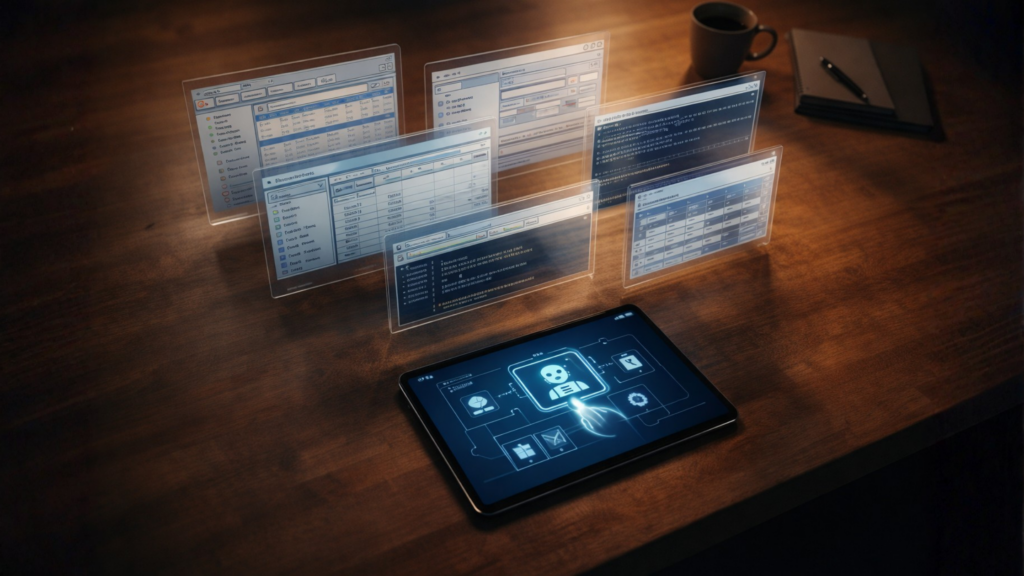
Let me paint you a picture of my old Tuesday morning. I’d start in Slack, reading updates and trying to figure out what needed my attention. Then I’d jump to ClickUp to check project status and update tasks. Over to HubSpot to review deals and follow up on leads. Back to Slack to respond to messages. Into Google Calendar to block time and reschedule meetings.
By 10 AM, I’d touched seventeen different interfaces. My brain had context-switched so many times I felt like I was running through mud. And I hadn’t actually created anything of value yet.
Sound familiar?
This is what I call productivity theatre – the exhausting performance of looking busy while drowning in interface friction. We’ve optimized the wrong thing. We’ve built better tools when what we needed was to eliminate the need for tools entirely.
The Single Conversation Experiment
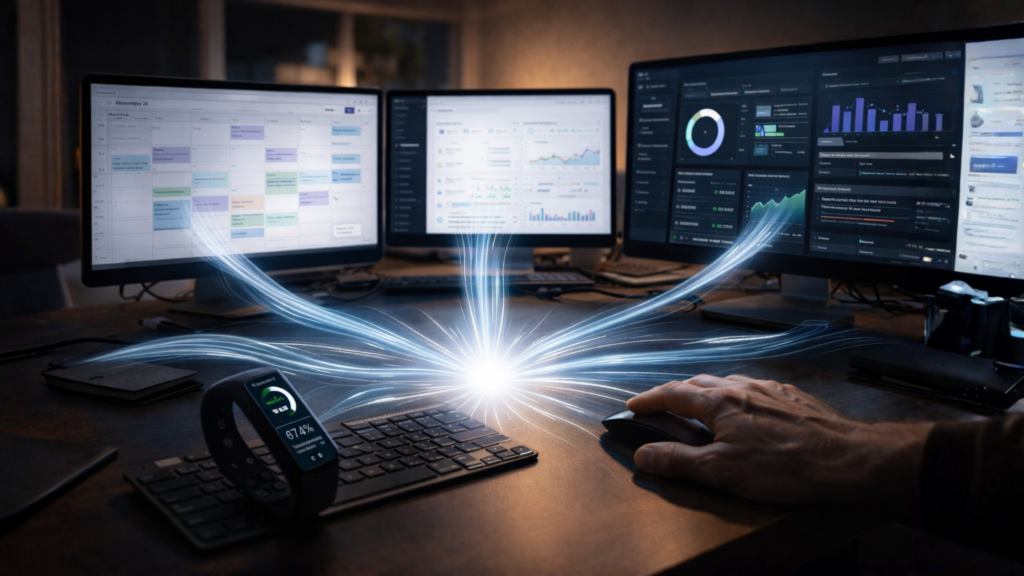
Six days ago, I did something different. I built Claude connectors that pull everything I need from my business systems into one conversation. My entire workday now happens in a single chat window.
Need project status? I ask Claude.
Want to update a deal in HubSpot? I tell Claude.
Need to assign tasks to my team? Claude handles it.
Looking for calendar conflicts? Claude spots them.
Listen to the full episode: https://www.linkedin.com/video/live/urn:li:ugcPost:7447630151649034240/
I had a one-on-one with a team member yesterday and simply said, “Give me an update on all of Elijah’s tasks and status.” Boom. All there. No clicking, no loading screens, no remembering which platform stores what information.
The result? I reclaimed roughly two hours per day from administrative overhead. Two hours that used to disappear into the gaps between applications.
Why Interfaces Are Friction Factories
Here’s what most people miss: your brain wasn’t built for constant context-switching. Every time you jump from ClickUp’s interface to HubSpot’s interface to Slack’s interface, you’re forcing your mind to relearn the rules. Where are the buttons? How does the navigation work? What was I looking for again?
That mental gear-changing is expensive. It’s cognitive overhead that kills momentum and drains energy. And for what? So you can update a database field that could just as easily be updated through natural conversation.
The dirty secret of modern SaaS is that most platforms are just databases with fancy interfaces on top. ClickUp is a great project database. HubSpot organizes customer data beautifully. But their interfaces? They’re friction factories designed to justify subscription fees, not optimize human productivity.
The Coming Interface Revolution
What I’ve built for myself is early evidence of a fundamental shift happening right now. We’re moving from a world of application interfaces to a world of conversation interfaces. Instead of learning seventeen different ways to input data, we’ll have conversations that route information to the right places automatically.
This isn’t just workflow optimization. It’s the end of interface proliferation as a business model.
Think about the implications: when you can manage projects, update CRMs, coordinate teams, and analyze data through natural conversation, what happens to all those carefully designed user interfaces? What happens to the monthly subscription fees that pay for interface complexity you no longer need?
The companies that figure this out first – the ones that let you work the way you think instead of forcing you to think the way they built their screens – those are the ones that’ll win.
Making It Practical: The Adventure-Education-Automation Path
If this resonates but feels overwhelming, start small. Pick the one interface that annoys you most – probably your CRM or project management tool – and experiment with AI connectors that let you access that data through conversation.
The first time you do it, it’s an adventure. You’re learning what’s possible.
The second time, it’s education. You understand the patterns.
The third time, it’s automation. You’ve eliminated another friction point forever.
Don’t try to consolidate everything at once. That’s a recipe for complexity that defeats the purpose. Instead, eliminate one source of fiddliness per week until you’ve built your own single-interface workflow.
The goal isn’t to replace your tools. It’s to eliminate the mental overhead of jumping between them. To work the way your brain actually works – through conversation and natural language – instead of clicking through screens designed by committees.
The End of Fiddliness
We’re at an inflection point. The technology exists today to eliminate interface friction from knowledge work. The question is whether you’ll continue performing productivity theatre or start building workflows that actually match how humans think.
I choose conversation over clicking. Flow over friction. One interface over seventeen.
The end of fiddliness starts now.
→ Ready to eliminate interface friction?
Get practical tools at launchpad.ascendlabs.ai
→ Need help building this for your team?
Book time at tidycal.com/kevinwilliams